Metal roof cleaning needs a gentle method that protects paint, seams, fasteners, and sealants. Low-pressure cleaning can remove algae, moss, black streaks, and dirt without forcing water beneath panels. The right plan starts with a roof check and ends with a careful rinse that protects the building and nearby plants.
Metal roofs look strong, but their finished surfaces still need care. Paint, screws, sealants, laps, and panel edges can suffer during rough cleaning. For homeowners and property owners Pressure Washing Conway AR can help explain which method fits the roof. This same care helps shops, offices, rental homes, and other buildings near Downtown Conway, Hendrix Village, Greenbrier, Vilonia, Mayflower, and Menifee.
Table of Contents
- Why does metal roof cleaning require a different approach?
- How do roof coatings affect the cleaning method?
- Why do panel seams and fasteners matter during cleaning?
- What cleaning solution is safest for a metal roof?
- Can pressure washing damage a metal roof?
- How should a metal roof be prepared and rinsed?
- How often should a metal roof be cleaned and inspected?
Why does metal roof cleaning require a different approach?
Metal roof cleaning needs a different approach because the roof has a finished surface and many joined parts. Panels may be made from steel or aluminum. They may also have paint, stone coatings, sealants, screws, clips, and overlapping edges. Each part can react in a different way to water, pressure, and cleaning products.
How metal roofing differs from asphalt shingles and other materials
Asphalt shingles have loose mineral granules that strong pressure can remove. Metal roofs do not have those granules, but they are not safe to blast. A pressure stream can scratch paint, bend thin panels, loosen sealants, or force water under a lap.
Tile, cedar shake, and slate roofs need special care too. Tile can crack, cedar can split, and slate can break under foot traffic or high pressure. Metal may be easier to walk on when dry and safe, but trained workers still need to follow roof safety rules.
What can go wrong with overly aggressive cleaning
Strong cleaning can cause more than surface marks. It may expose bare metal, harm a protective finish, or open a path around a screw. Water can then reach insulation, roof decking, walls, or ceilings. The damage may not show until the next storm.
A homeowner can check for stains from the ground, trim nearby branches, and clear loose debris from safe areas. Roof work becomes a professional job when the roof is steep, wet, fragile, high, or near power lines. Pressure Washing Conway AR can explain safe choices for Conway homes and businesses without treating every roof the same.
How do roof coatings affect the cleaning method?
Roof coatings affect the cleaning solution and the rinse pressure. A coating is a protective layer placed over metal to help resist weather, rust, and sunlight. It may be factory-applied paint, a resin finish, or a later restoration layer.
Common metal roof coatings and their cleaning needs
Many metal roofs have painted finishes made for outdoor use. Some older roofs have faded, chalky, or peeling paint. Other roofs have a waterproof coating that needs a product approved by its maker. The roof’s age and finish should be checked before any solution is used.
A small test area is a smart first step. The test should be done in a hidden place and rinsed well. The worker can then check for color change, streaking, chalk, softening, or lost shine. A roof is not truly clean if its finish has been harmed.
How to protect painted and protective finishes
Cleaning products should be mixed and used as directed. A stronger mix does not always clean better. It can fade paint, harm plants, stain siding, or affect metal trim. The solution should stay wet only as long as needed, followed by a full rinse.
Workers should not drag hoses, tools, or ladders across painted panels. They should protect skylights, vents, solar equipment, gutters, windows, and painted walls. Solar Panel Cleaning may help when rooftop panels collect dust and organic growth, but panels need their own safe process.
Why do panel seams and fasteners matter during cleaning?
Panel seams and fasteners matter because they can let water enter. A seam is the place where two roof panels meet. A fastener is a screw or clip that holds a panel in place. Sealants and washers help close these joints, but they can age, crack, or fail.
How seams, laps, and penetrations affect water flow
Metal roofs use seams, laps, ridges, valleys, vents, and other openings to move water away. A pressure stream aimed across a lap can push water in the wrong direction. It can also lift old sealant or move debris into a joint.
Roof penetrations are places where something passes through the roof. These include vents, pipes, skylights, and mounting brackets. Such areas need a slow visual check before cleaning. A worker should look for cracked sealant, open edges, rust, loose trim, and past leak signs.
What to check around screws, washers, and sealants
Exposed screws should sit firmly and have intact washers. A cracked, flat, or missing washer may let water enter around the screw. Rust near a fastener may point to a larger problem, especially when the metal looks thin or swollen.
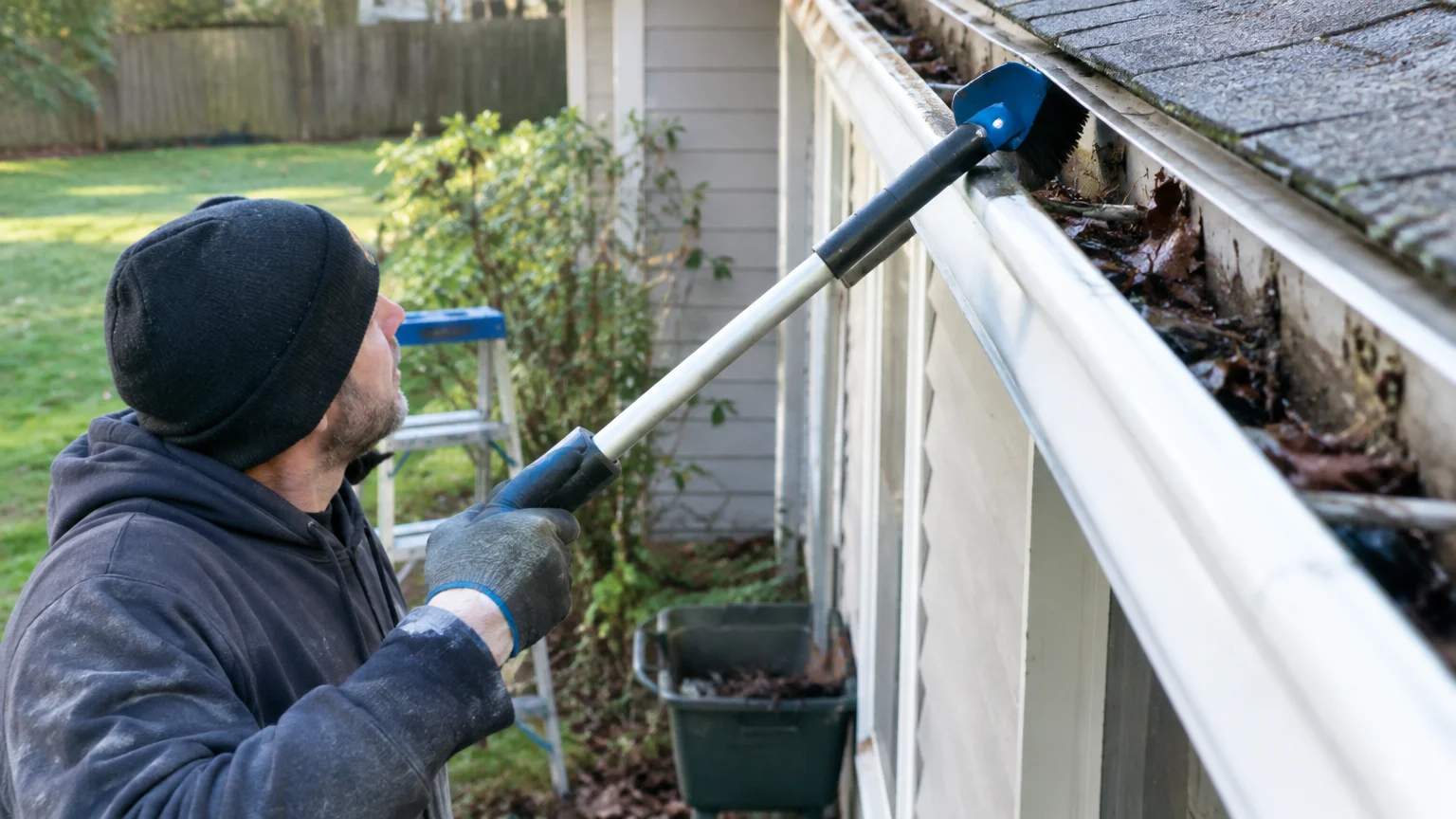
Cleaning does not replace roof repair. A homeowner can inspect visible trim from the ground and report ceiling stains or attic moisture. A professional should handle roof access, sealant work, loose panels, and repairs. Gutter Cleaning Services can also help when blocked gutters send water back toward lower roof edges.
What cleaning solution is safest for a metal roof?
A mild, roof-safe solution used with low pressure is often the safest starting point. Soft washing uses a cleaning solution and gentle water flow instead of force alone. It can loosen algae, moss, mildew, black streaks, bird residue, and stuck-on grime.
How soft washing helps remove algae, moss, and grime
Algae can leave dark streaks on a roof. Moss can hold moisture against the surface. Lichen may attach more firmly and need more time to release. A suitable soft wash solution helps break down this growth so it can be rinsed away with less force.
The cleaner should first identify the growth and roof finish. A product that works on one surface may harm another. The area below the roof matters too. Plants, painted surfaces, stone, wood, and metal gutters may each need different protection.
Why solution strength and dwell time must be controlled
Dwell time means how long a cleaning solution stays wet before rinsing. Too little time may leave growth behind. Too much time can dry the solution and raise the chance of marks or plant damage.
The surface should stay wet during the process. Workers can clean smaller areas instead of covering the entire roof at once. They should watch wind, heat, shade, and runoff. Soft Washing Services can help when a roof needs gentle treatment instead of strong pressure.
Can pressure washing damage a metal roof?
Yes, pressure washing can damage a metal roof when the pressure, nozzle, distance, or spray direction is wrong. The risk is higher on old paint, thin panels, rusted areas, open seams, and worn sealants. Metal roof cleaning should focus on controlled rinsing rather than maximum force.
When pressure creates avoidable risks
A narrow nozzle can act like a cutting tool. It may strip paint, leave lines, or force water under panel edges. Pressure can also bend soft flashing and harm caulk around vents. The roof may look clean while hidden water entry creates a later repair problem.
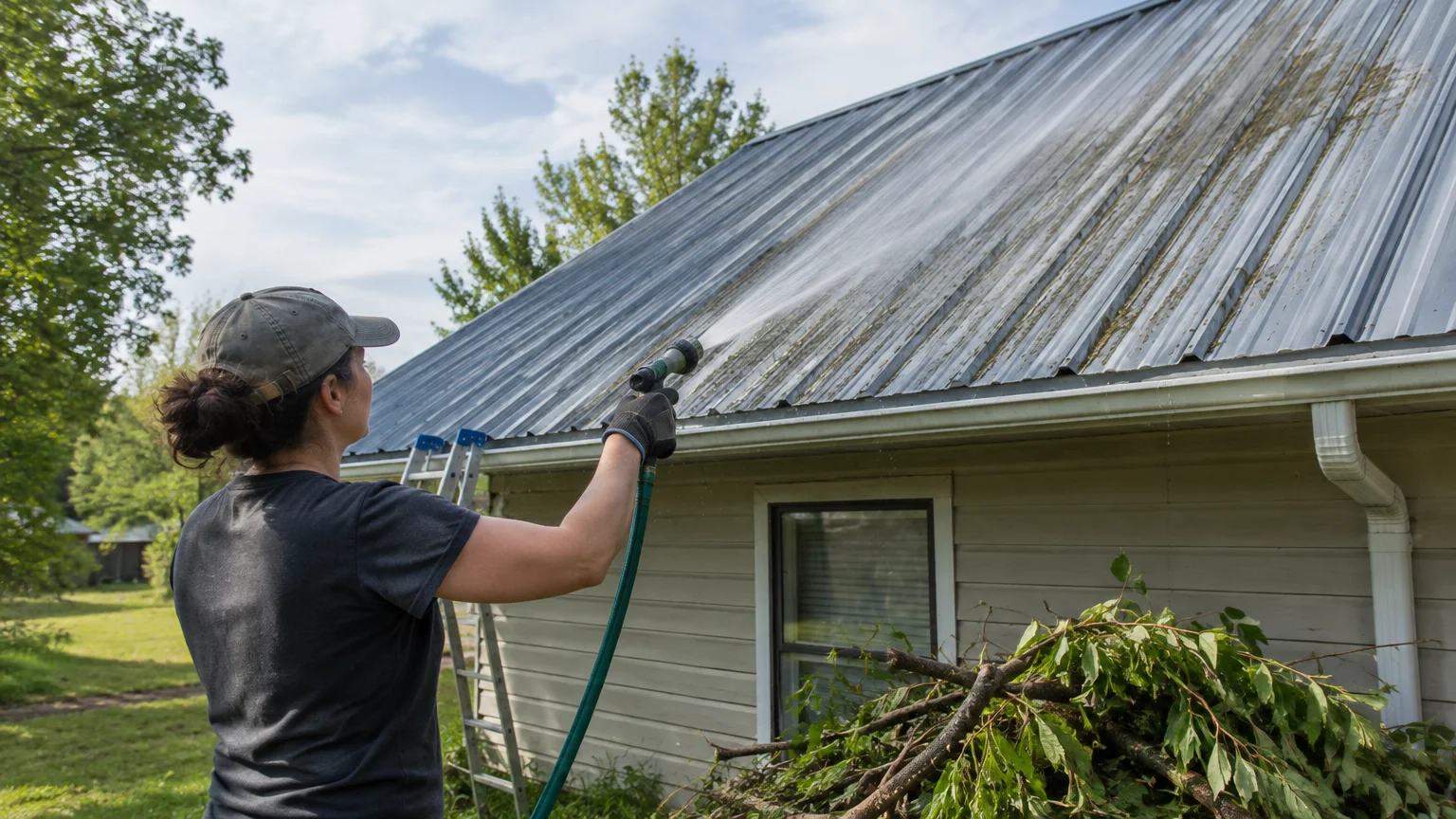
A homeowner does not need a pressure washer for every roof stain. Ground-level checks, gentle hose rinsing from a safe position, and branch removal are often reasonable upkeep. No one should climb onto a slick or steep roof to save time.
How professionals balance rinsing power with surface protection
A careful worker chooses a wide spray pattern and keeps the wand at a safe distance. The spray should not aim against seams. The goal is to rinse away loosened dirt without wearing down the coating. The worker should also control where dirty water travels.
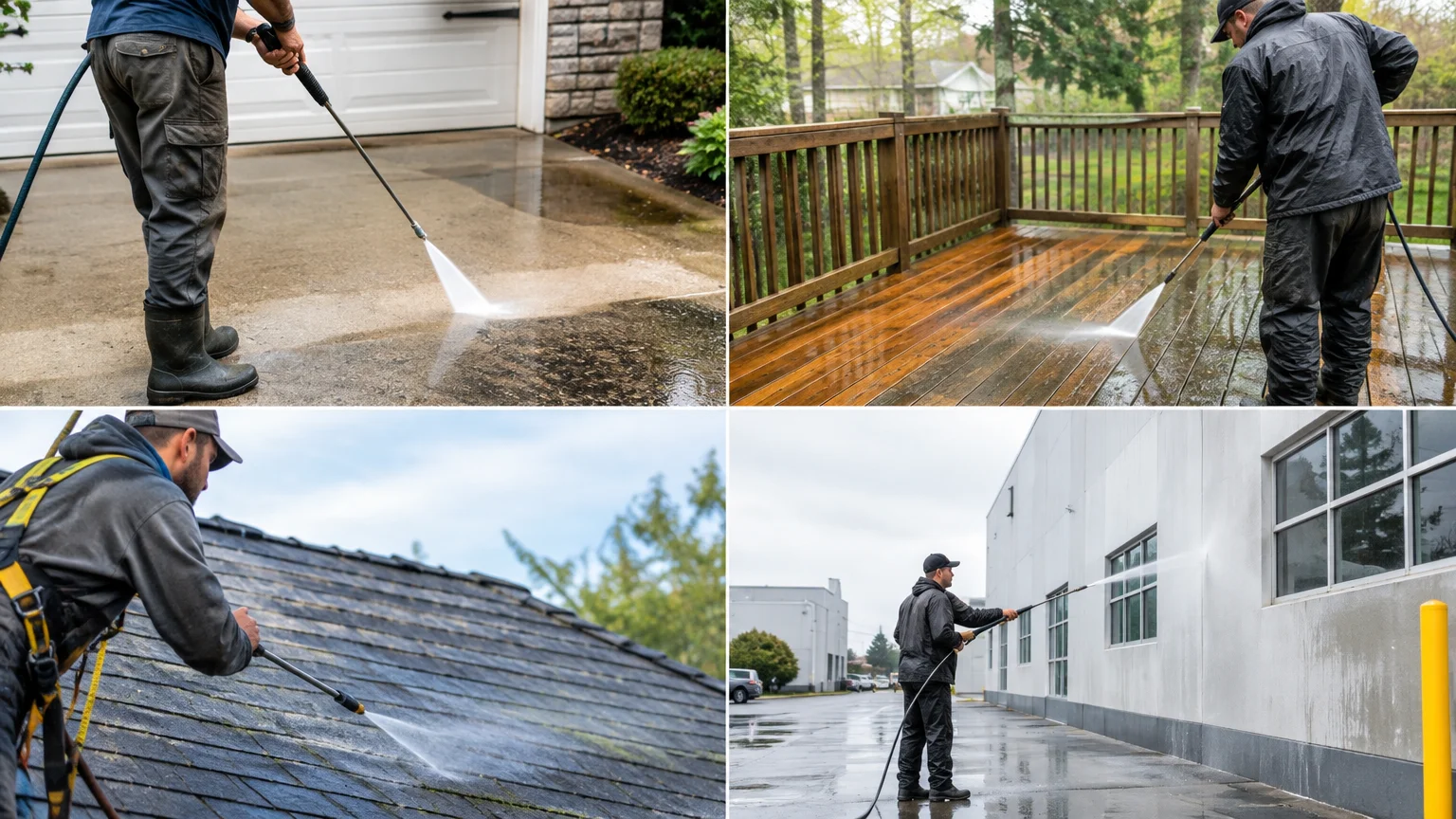
The method may change during one job. A clean painted panel may handle a gentle rinse, while a rusted edge may need hand care or repair first. Professional Pressure Washing services can assess these differences before choosing tools and cleaning steps.
How should a metal roof be prepared and rinsed?
Preparation helps prevent damage before cleaning starts. The roof, building, grounds, and drainage paths should be checked first. This plan also helps keep dirty water away from doors, windows, walkways, plants, and nearby surfaces.
What to inspect before cleaning begins
The inspection should look for loose panels, exposed screws, cracked sealant, rust, damaged flashing, blocked gutters, and weak roof edges. Workers should also note skylights, vents, antennas, solar equipment, and old repair areas.
A simple preparation list includes:
- Move outdoor furniture and fragile items away from runoff.
- Cover or wet plants before cleaning begins.
- Close windows, doors, and nearby vents.
- Check gutters and downspouts for clear water flow.
- Mark damaged areas that need repair before washing.
The roof should not be cleaned during unsafe wind, lightning, or heavy rain. A wet metal roof can become very slippery. Safe access matters more than finishing the work quickly.
How to manage runoff, landscaping, and surrounding surfaces
Runoff should move toward safe drainage areas. Plants can be rinsed before and after cleaning to limit contact with solution. Painted siding, decks, concrete, and vehicles should be protected from dirty water and overspray.
A careful rinse starts at the highest safe point and moves in one controlled direction. Workers should avoid pushing water under laps or toward open seams. They should check gutters after rinsing. Cleaning Rain Gutter areas may be part of the wider maintenance plan when roof debris enters the drainage system.
How often should a metal roof be cleaned and inspected?
A metal roof should be checked when owners notice stains, moss, blocked drainage, rust, or changes after storms. Cleaning needs depend on trees, shade, humidity, roof slope, nearby dust, and the building’s setting. No single schedule fits every property.
Signs that indicate it is time for professional attention
Dark streaks may only be a surface issue, but spreading growth needs a closer look. Moss can hold moisture against the finish. Rust spots, loose trim, dripping gutters, and ceiling stains may point to repair needs instead of simple cleaning.
Look for these warning signs:
- Stains that spread across several panels.
- Moss or lichen growing near seams or edges.
- Rust around screws, flashing, or cut panel ends.
- Water marks inside the attic or upper rooms.
- Gutters that overflow during normal rainfall.
- Peeling coating, chalking, or exposed bare metal.
A homeowner can document these signs from the ground. Roof access should be left to trained workers when the surface is steep, wet, fragile, or hard to reach.
How routine maintenance supports the roof system
Routine checks help owners find small issues before water reaches indoor spaces. They also help keep gutters, downspouts, roof edges, and nearby siding working together. After major storms, owners should check for branches, dents, lifted trim, and new leaks.
A written maintenance record can note the roof material, coating type, visible damage, cleaning date, and areas that need watching. This record helps owners, tenants, property managers, and investors make sound choices. Pressure Washing Conway AR can discuss roof cleaning and related exterior care in a clear way.
Key takeaways
- Metal roof cleaning should protect coatings, seams, fasteners, and sealants.
- Soft washing usually uses less force than aggressive pressure washing.
- Cleaning products need careful testing, mixing, dwell time, and rinsing.
- Roof damage should be repaired instead of hidden by a cleaning job.
- Safe access and runoff control matter as much as surface appearance.
Frequently Asked Questions
Is soft washing safe for a painted metal roof?
Soft washing can be safe for a painted metal roof when the product, strength, dwell time, and rinse method fit the coating. A hidden test area should be checked first. Workers should also protect plants, windows, siding, gutters, and other surfaces from solution and runoff.
Can bleach be used on a metal roof?
Some professional roof cleaning systems use a controlled cleaning agent, but household bleach should not be poured on a roof without a clear plan. Strength, contact time, runoff, plants, and the roof coating all matter. The product label and coating guidance should direct the process.
How can black streaks be removed from metal roofing?
Black streaks can often be removed with a roof-safe soft wash solution and a gentle rinse. The streaks may come from algae or other organic growth. Hard scrubbing or a narrow pressure stream can harm the finish, so the roof material should be checked first.
Should gutters be cleaned before or after the roof?
Gutters may need attention before and after roof cleaning. Clearing them first helps water drain during the wash. Checking them again afterward removes loosened debris. Owners should also confirm that downspouts discharge safely away from doors and foundations.
Can a homeowner clean a metal roof without a professional?
A homeowner can inspect the roof from the ground, remove nearby branches, and watch for stains or leaks. Climbing onto a metal roof is risky, especially when wet or steep. Professional help is safer when the roof has damage, hard access, old coatings, or heavy growth.
Conclusion
Metal roof cleaning is not just spraying until panels look bright. The safest method protects the coating, respects panel seams, avoids damaged fasteners, and controls runoff. Soft washing often works better than strong pressure, but the roof’s condition should guide every step.
Pressure Washing Conway AR serves property owners who want clear guidance for roof care and nearby exterior surfaces. Contact us to discuss safe metal roof cleaning for your property.